


The Rich Cinematic and Artistic World of Bahram Beyzaie
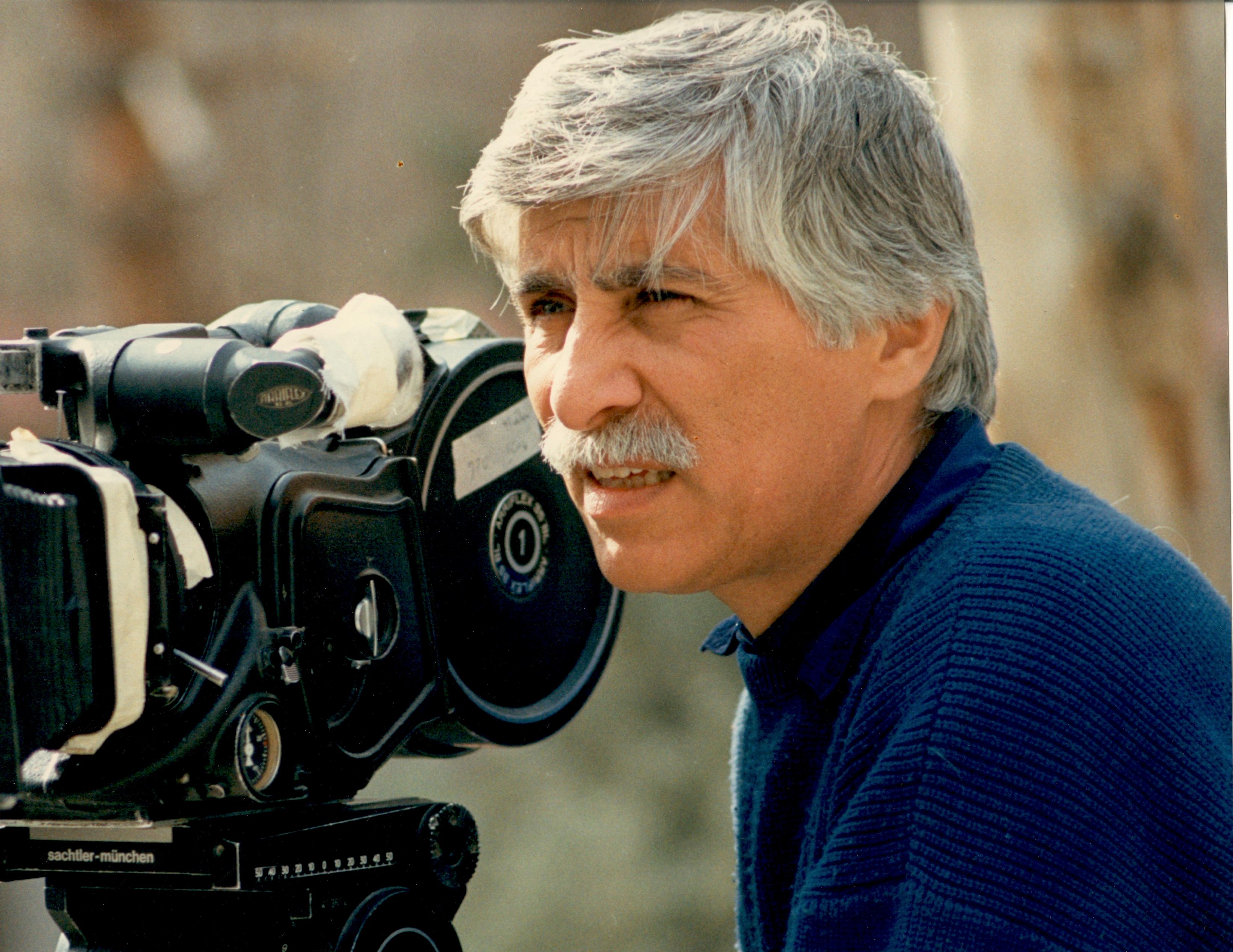
By H.H. (Poet, Director, Curator)
Bahram Beyzaie is two years older than Abbas Kiarostami. In 1970, both made their first short films at the Institute for the Intellectual Development of Children and Young Adults (Kanoon): Kiarostami directed The Bread and Alley, while Beyzaie directed Uncle Mustache. At the time, Beyzaie, who was born into a family of poets, was already a prominent scholar and playwright of Asian and Iranian theater, and was teaching in the theater department of the University of Tehran (serving as its chair from 1972 to 1979). Subsequently, Kiarostami continued to make short films throughout the 1970s. Beyzaie, however, began directing multiple feature films starting in 1971, rapidly becoming a cornerstone of the first Iranian New Wave. By contrast, Kiarostami did not emerge as a representative figure of the second wave until the release of Where Is the Friend's House? in 1987.
Cinema of Children and the Marginalized
Like Kiarostami, all of Beyzaie’s early films featured children as protagonists or as the primary background. Uncle Mustache serves as a metaphor for the confrontation and (the hope for) reconciliation between traditional culture/regime and folk vitality. The Journey, on the other hand, follows a street orphan’s quest for the parents he imagines, surveying abandoned furniture and objects in the ruins of the city's periphery; it also possesses an allegorical structure akin to Waiting for Godot, where redemption is sought repeatedly day after day yet remains unattainable, making this Beyzaie's personal favorite. Beyzaie maintained a continuous focus on outcasts and outsiders marginalized by society. In his theatrical works from the 1960s, he had already examined how traditional cultural narratives persecute non-conformists by pushing them into extreme roles of either heroes or demons. Now, in his cinema, he portrayed both heroes and demons as victims, while introducing contemporary characters such as women, marginalized groups, the working class, and intellectuals. His debut feature film, Downpour (1971), depicts the antagonism between an outsider teacher and a conservative social environment. Although the teacher single-handedly cleans out an auditorium for schoolchildren to perform in, he is ultimately transferred by a resentful principal, and his budding romance is abruptly cut short.
Outsiders in the Mythological World
Distinct from the New Wave's mainstream of realism, Beyzaie always endows his films with vivid tones of mythology and folklore. Starting from his second feature film, The Stranger and the Fog, he began to boldly draw on Iranian mythology, history, and folk culture, making his works more legendary and dramatic, while showcasing a completely different side of Iranian culture. The Stranger and the Fog resembles the folklore worlds of Sergei Parajanov’s Shadows of Forgotten Ancestors and Imamura Shohei's The Profound Desire of the Gods, filling the screen with rituals, music, and dance; it tells the story of a wounded, amnesiac stranger from the sea whose arrival leaves an entire coastal tribe filled with anxiety. He marries Rana, a widow with a young child, and attempts to integrate into local life, yet he ultimately cannot evade the mysterious forces from the outside. Ballad of Tara, on the other hand, is more akin to a hybrid of American Westerns and Japanese samurai films, where the ghost of a warrior relentlessly haunts the widow Tara to demand the return of a sword left behind by her ancestors, but later, because he falls in love with Tara—who raises two young children—he becomes unwilling to take the sword back to fulfill his duty. The entire film drifts between reality and illusion, with imagery such as masks and blood-red horses interspersing from time to time. The scene where numerous ancient warriors emerge from the sea plays like a surreal sequel to Kagemusha and Ran, leaving a startling impression.
The completion of Ballad of Tara in 1979 coincided with the Islamic Revolution. Consequently, Tara—the fearless woman desired by both the living and the dead—was also silenced, yet she also became a harbinger of women’s yearning for autonomy. During the period when he had no films to shoot, he continued to write stage plays and screenplays. The film Bashu, the Little Stranger, which he finally managed to complete in 1986, was not cleared for release until 1989. In 1999, the Persian film magazine Picture World polled 150 Iranian film critics and professionals, who voted it the greatest film in Iranian cinema history. Bashu, the Little Stranger, along with The Stranger and the Fog and Ballad of Tara, are regarded as Beyzaie’s highly allegorical "Village Trilogy," which boldly addresses contemporary ethnic issues. In Bashu, the Little Stranger, a child named Bashu from the Khuzestan region on the southern coast of the Persian Gulf in Iran flees via truck to a Caspian tribe on the northern coast after his village is destroyed by war (alluding to the Iran-Iraq War at the time). Because of his dark skin and inability to speak the local language, he is ostracized. Naii, a woman whose husband has left home to fight in the war and who is raising two young children alone, defies all objections to take him in. The child, who has African ancestry, speaks Arabic, while the Caspian tribe speaks Gilaki—neither of which is the official Persian language—making the film's strong sense of land and identity unmistakable.
Women of Autonomy and Dignity
Women are the most prominent figures in Beyzaie's films. The seamstress in Downpour is trapped between the man who financially supports her family and the newly arrived young teacher, unable to achieve autonomy. However, in The Stranger and the Fog, Rana, played by the same actress Parvaneh Massoumi, courageously chooses to shield a marginalized outsider through marriage. From this point on, the widow became Beyzaie’s most cherished female archetype—not only as independent women, but also as mothers carrying the next generation, striving to survive in a harsh and untamed world. Rural villages and tribes may lack the sophistication of urban civilization and are equally closed and conservative, yet women find more room there to struggle and assert themselves. At the beginning of Ballad of Tara, Tara, with her two children, drives a horse carriage at full speed through the countryside, almost like a Western pioneer. Naii in Bashu, the Little Stranger can even communicate with birds and frequently uses roars to drive away wild boars encroaching on the cultivated land. Traumatized by war, the child Bashu often becomes disoriented seeing birds reminds him of fighter jets, and flames conjure the image of his mother burning to death after a shelling. Yet, guided by Naii's "nature therapy," he eventually learns to chirp at flying birds as well.
Beyzaie's women are filled with a fierce sense of autonomy; they can shoulder heavy burdens but refuse to endure humiliation. Naii drives all the relatives who ostracize Bashu out of the family feast, or uses tree branches to whip neighboring children who bully Bashu. The closing scene of Ballad of Tara, where Tara holds a sword and slashes at the ocean waves all alone, is the ultimate manifestation of the will to live. The images of these women running at length across different films can be seen as Beyzaie's eternal thematic motif.
The realism and symbolism in Bashu, the Little Stranger are blended seamlessly. When Bashu is left alone, his deceased mother appears as a spirit to look after him. When Naii falls gravely ill and Bashu has nowhere to turn for help, he beats an iron bucket to cry out for help; however, that rhythm becomes the accompaniment for Naii to dance and heal herself during her illness. Bashu also leads his peers in striking stones and chanting to pray for a bountiful harvest, even playing the flute for the crops in the fields. While the outsiders in previous works always eventually drifted away into the distance, much like the heroes in Western films, in Bashu, the Little Stranger, the outsider becomes integrated into the community. The outsider presents a challenge to traditional society, but also presents an opportunity for change.
A Piece of a Grand Creative Vision
Beyzaie was exiled to Sweden with his family in the late 1980s but returned to Iran alone to continue his creative work. It was not until 2009 that he traveled to Stanford University in the United States, where he spent the rest of his life. A large number of his theatrical works began to be translated and published. These plays reinterpreted Iranian legends and classics from a contemporary perspective, attempting to reclaim a traditional culture hijacked by religious dogmatism, and even portraying Shiite saints Imam Ali and Imam Hussein as open-minded intellectuals fighting against dogmatic fanatics like the extremists of the Islamic Republic. The breadth, depth, and timeliness of his work are breathtaking; cinema is merely a piece of the puzzle that makes up his vast creative output.
Translated by Taipei Film Festival Program Team