


The Lost Wave
Written by Hadi Alipanah (film critic and journalist)
For me—just as for many Iranian cinephiles—the label “New Wave”, used to describe the flourishing period of Iranian cinema in the late 1960s and the 1970s, has always felt somewhat strange. For years, only a very small number of films from that era were accessible, and even those were in extremely poor quality—first on VHS tapes, and later on obscure YouTube uploads. But the vast majority of the films could only be experienced indirectly, through surviving news pieces, reviews, and interviews scattered across old magazines and newspapers. In other words, instead of watching the films, we read about them, and then imagined them in our minds.
Even today, a significant portion of the films from that period remain inaccessible. So, explaining the nature of Iranian cinema in those years—especially to a non‑Iranian audience—still comes with many challenges. In this text I will try to write about the nature of that era and my own experience as an Iranian cinephile. And, of course, I will explain that despite the recent wave of film restorations and the work of independent researchers, we still have many missing pieces needed to complete the history of Iranian cinema from that time.
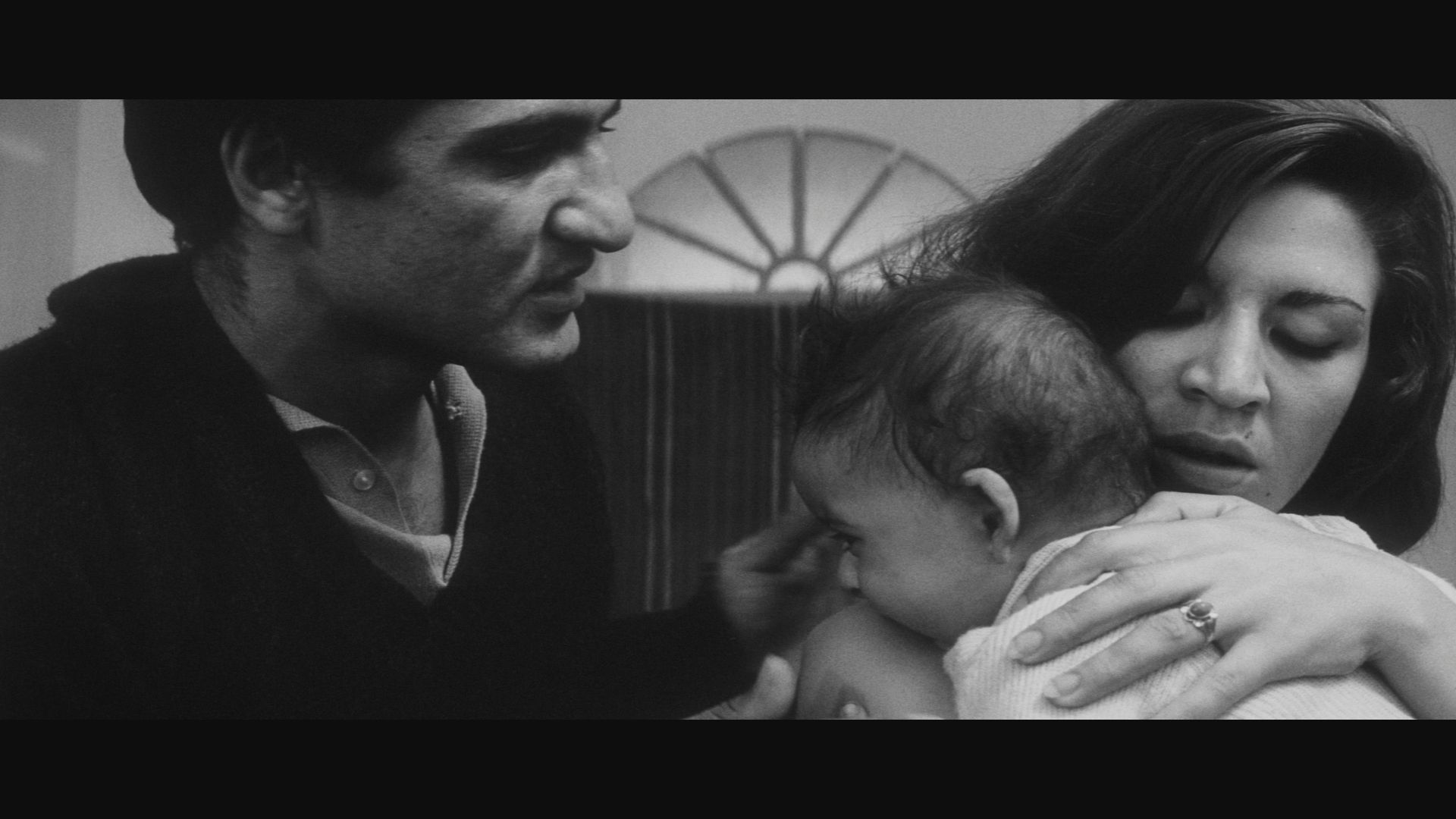
Still from Brick and Mirror
Forging a Wave Beyond Filmfarsi
Before and simultaneously with the formation of the New Wave of Iranian Cinema, Filmfarsi was the dominant form of Iranian commercial cinema. Filmfarsi is a term that was first used by Houshang Kavousi to describe the commercial cinema in Iran. Iranian commercial cinema began with the founding of the Pars Film studio and the production of Amir's Prisoner (1948) and Shame (1950) by Ismail Kushan. These films were of very low cinematic quality. The dominant themes of these films were a mixture of male fantasies, the instrumentalization of women, action, and cheap melodramas. An action scene, a dance or sex scene, a melodrama scene, and a repeat of this structure until a happy or triumphant ending for the male protagonist. These films were generally low-quality imitations of Bollywood, Italian, Turkish, and Hollywood films.
The origins of the New Wave filmmakers can be divided into three broad categories. First, there were filmmakers such as Farrokh Ghaffari, Ebrahim Golestan, and Fereydoun Rahnema, who had studied abroad and, upon returning to Iran, sought to materialize a new kind of cinema—one distinct from commercial filmmaking. Then there were filmmakers like Mohammad‑Reza Aslani, Nasser Taghvai, and Amir Naderi, who came to cinema with backgrounds in other artistic fields. And finally, there were the independent and avant‑garde filmmakers, most of whom had no academic training at all, yet attempted to create an entirely different form of cinema.
Each of these three groups, of course, shares certain points of intersection, or is defined by particular characteristics, and the impact of their work on the next generation is undoubtedly significant. It is also necessary to consider the different periods in which each of these filmmakers began working. For example, when Farrokh Ghaffari, Ebrahim Golestan, and Fereydoun Rahnema returned to Iran, there was essentially no such thing as an artistic or modern cinema in the country. They had to build everything from the ground up. Their approaches, however, differed considerably.
In his first film, South of the City (1958), Farrokh Ghaffari attempts to position himself somewhere between commercial and artistic cinema. Despite its clear inclination towards Italian Neorealism—and despite being the starting point of what we now call Iranian social cinema—the film still tries to appeal to the general audience. In contrast, Ebrahim Golestan, with Brick and Mirror (1965), and backed by his literary background, creates a modernist film with rhythmic dialogue. And Fereydoun Rahnema, with Siavash in Persepolis (1967), produces an avant‑garde work that seeks not to attract audiences or succeed at the box office, but to discover a new, distinctly Iranian cinematic language.
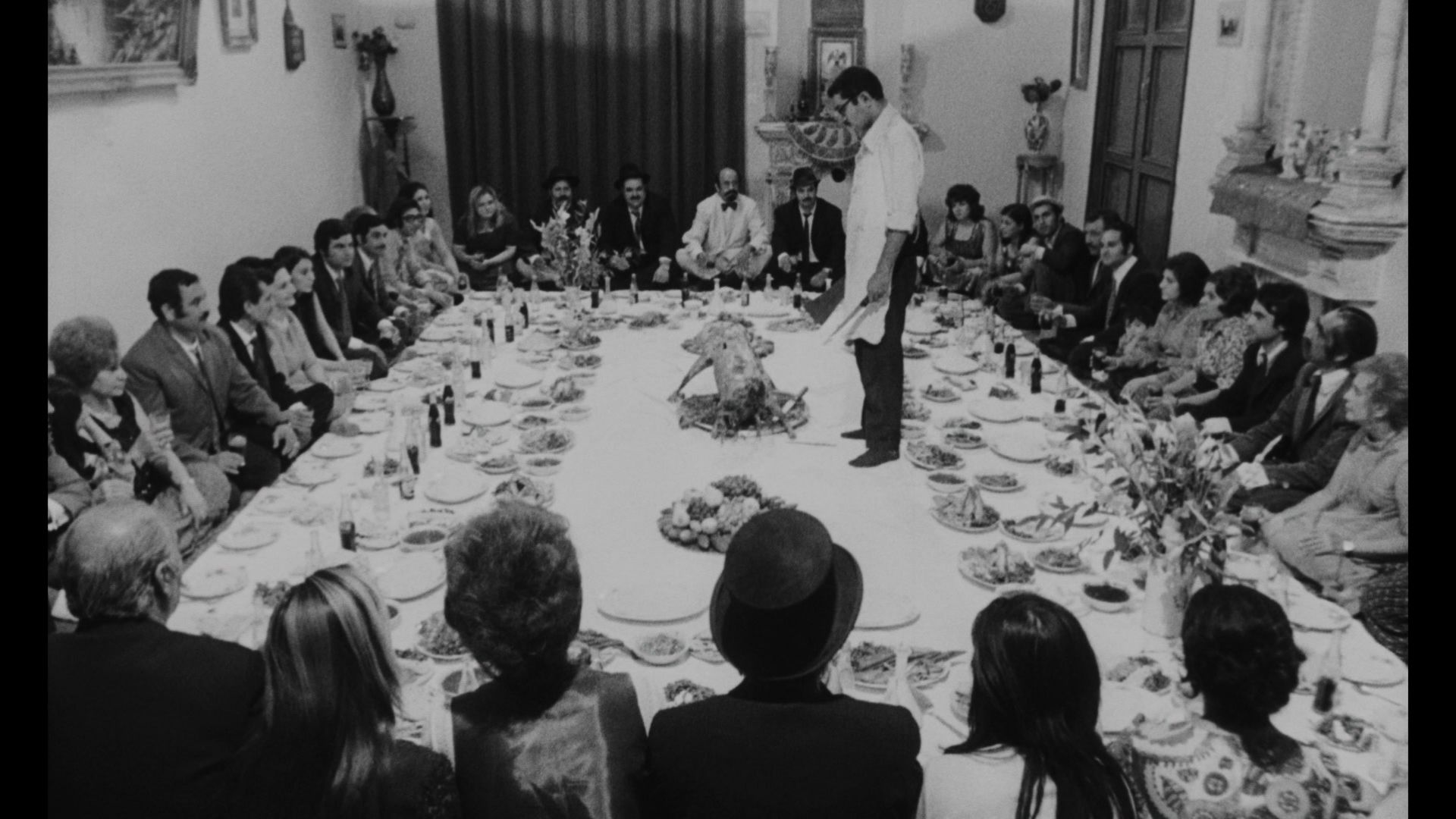
Still from The Postman
Navigating Western Impact on Persian Culture
In the next wave of filmmakers—those who returned to Iran after studying in European and American universities—we encounter figures such as Dariush Mehrjui, Khosrow Haritash, and Sohrab Shahid Saless. Again, three entirely different approaches to cinema, none of which can be easily explained in relation to one another or to the filmmakers who came before them. In his first film, Diamond 33 (1967), Mehrjui makes an action movie with a purely commercial approach. He then made The Cow (1968), adapted from a story by Gholam-Hossein Sa’edi, with a completely different approach from his debut. Today, The Cow is regarded as one of the most important films of the Iranian New Wave. Mehrjui, in another way, maintains this diversity throughout his career. Meanwhile, in Mr. Naive (1970) and The Postman (1972), with an inclination toward allegorical symbolism and social comedy, he portrays the deep contradictions in Iran of that era. A deeply traditional society with a fundamentally different culture, suddenly forced to swallow Western culture whole in the form of industrial modernism. Like many others, he sees no clear vision on the horizon for Iran after these sudden changes.
At the same time, Sohrab Shahid Saless, with the budget and raw stock of a short film, creates A Simple Event (1973)—the most influential film in the history of Iranian cinema for the generations that followed. If Mehrjui speaks in symbolic terms, in 1974's Still Life, Shahid Saless, by turning his camera to the simple life of an old railway worker in a remote region of Iran, finds that same unknown horizon in Iran's future in deeper yet more tangible layers of ordinary, everyday life. Is there a difference between the future of the boy in A Simple Event and that of the old man in Still Life? Both are equally uncertain and doubtful.
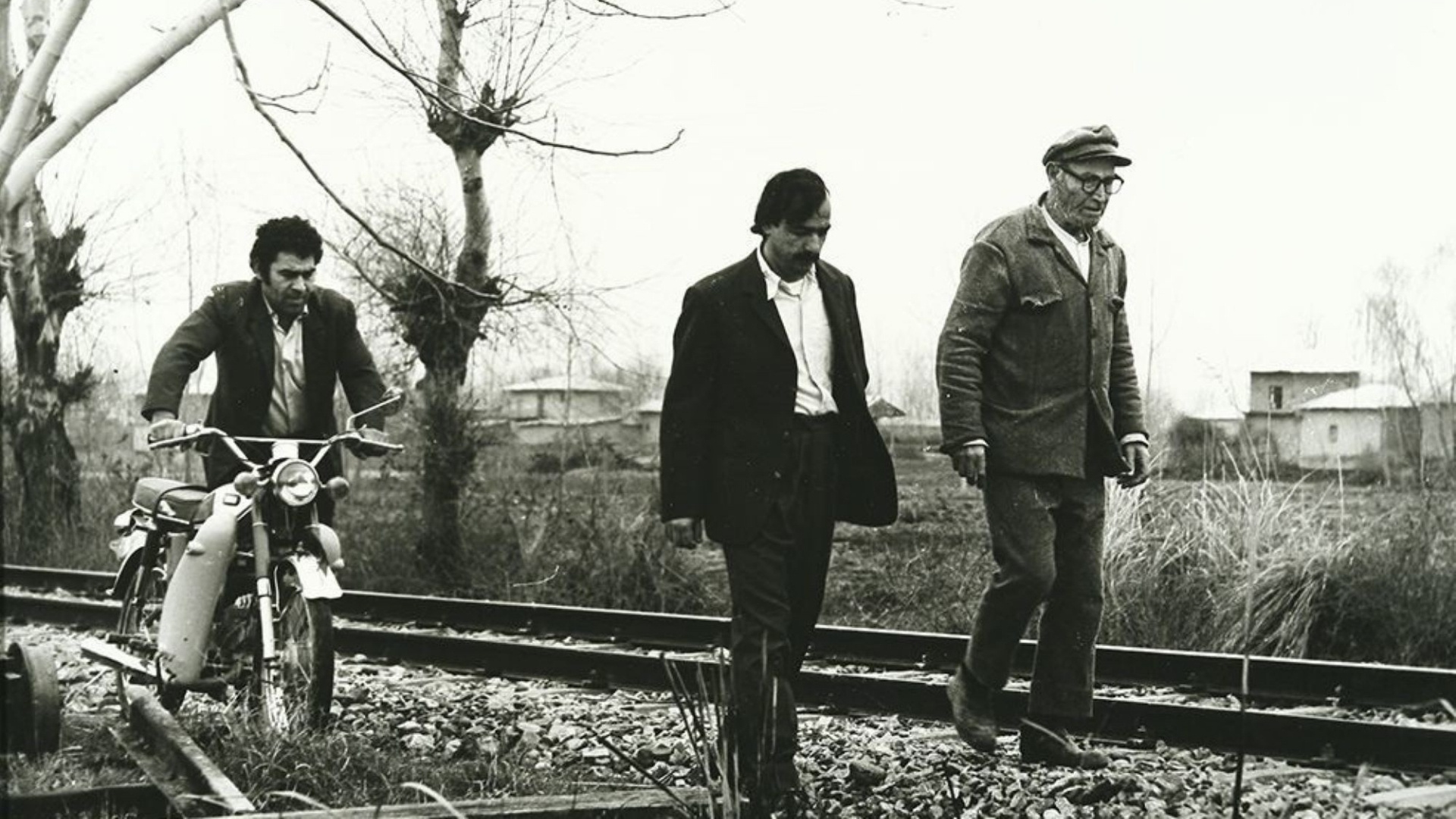
Still from Still Life
In another corner of the New Wave, Khosrow Haritash, the movement's least known and least appreciated director, turned his camera toward the youth of that era with films such as Adamak (1971), Speeding Naked Till High Noon (1972)¹—of which only the screenplay is available to us today—and Dream Diary of Rahman the Caretaker (1976). A generation that was exposed to the harshest repercussions of the fundamental changes in Iran at that time. The same generation who, just a few years later, would become the main force of the revolution. The same generation that the revolution betrayed and devoured.
I should note that most of Mehrjui’s films are still not available in a screenable quality. Only two of Khosrow Haritash’s films are available to us—and even those are in extremely poor quality. The rest are either lost or locked away in state archives. And Sohrab Shahid Saless, after making only two feature films, was forced to leave Iran; the rest of his remarkable body of work must therefore be examined as that of a European filmmaker.
The films of Nasser Taghvai and Parviz Kimiavi remain trapped under censorship. Mohammad‑Reza Aslani made only one feature film during this period, and the story of how a print of it was found and restored in Italy is a miracle. Bahram Beyzaie’s films have finally emerged from obscurity and are now accessible. A large portion of Amir Naderi’s films are still unavailable, and many filmmakers—such as Arby Ovanessian, Nasib Nasibi, Kamran Shirdel, Hajir Daryoush, Marva Nabili, Faramarz Moattar, and Parviz Sayyad—shaped an essential part of the Iranian New Wave with only a single feature film in their entire filmography.
_____________
¹ Speeding Naked Till High Noon film was made in 1972 and then banned. The original version was screened in 1974 just one time while a censored version was screened in some cinemas in Tehran for just a few days in 1976 and was banned once again. After the ban, the copies have been lost since then.
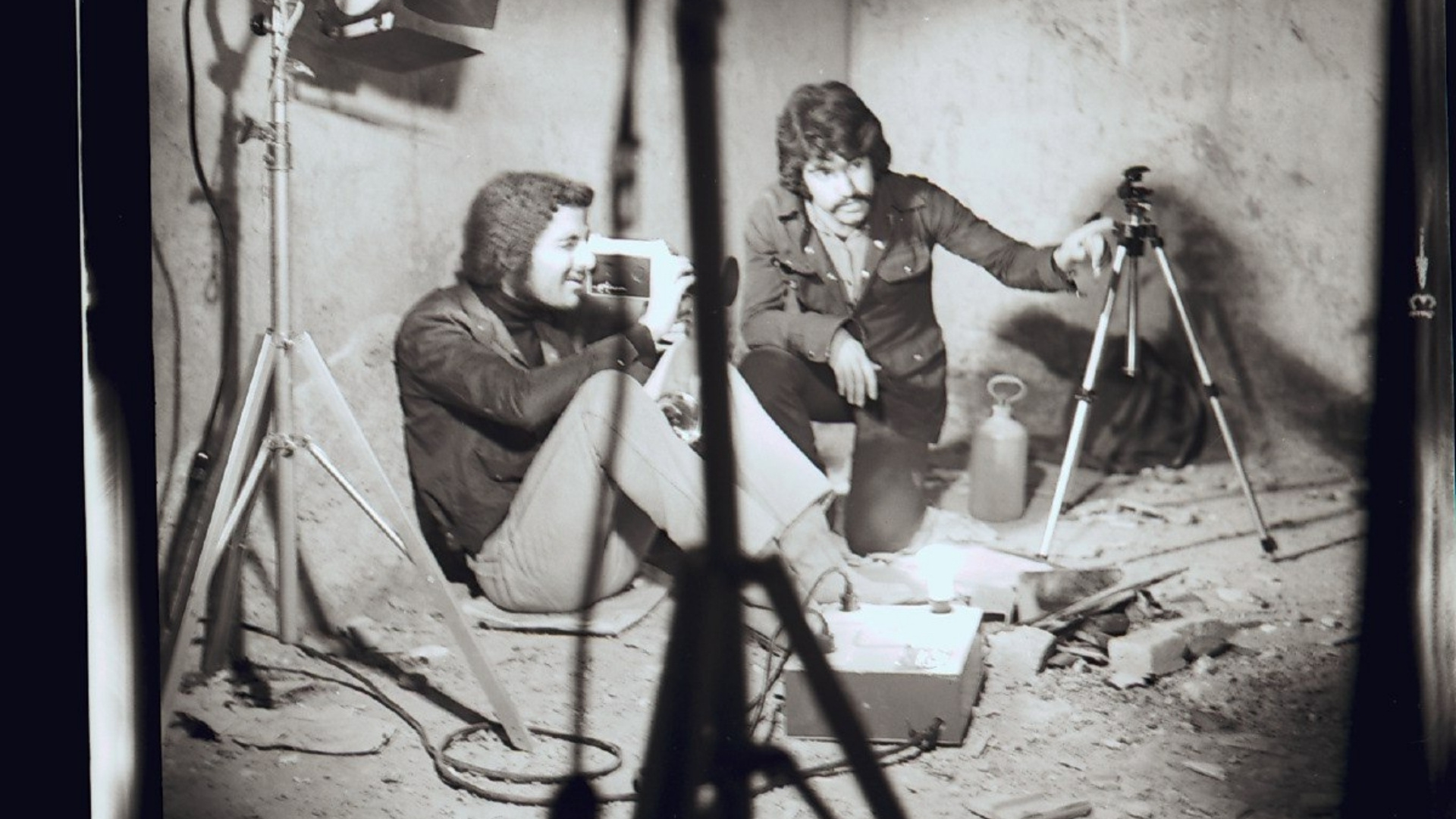
Behind-the-scenes photo of Abandoned Heights
Freeing Cinema with 8mm Cameras
This period must also be understood alongside the rise and expansion of the only true cinematic movement in the history of Iranian cinema, one whose history and films were completely forgotten for decades: Cinema-ye Azad (Free Cinema). From 1969 to 1979, it emerged as an amateur and independent movement built on 8mm cameras and filmmaking driven by experience rather than academic training. More than 1,000 short films, five feature films, and 300 filmmakers across more than twenty cities made films based on an idea proposed by the movement’s founder, Basir Nasibi—only to be forgotten with the arrival of the 1979 Revolution. Nasibi, as a critical response to Filmfarsi and state‑produced films, argued that, given the monopolization of 16mm and 35mm filmmaking equipment and raw stock by commercial studios and governmental institutions, 8mm cameras could serve as an accessible medium for filmmaking. For Nasibi, the material format was secondary; what mattered was the filmmaker’s intellectual and creative agency. At the time, the scarcity of educational resources constituted another major obstacle. Recognizing the disparity between the limited educational infrastructure and the growing number of young people interested in cinema, Nasibi positioned the 8mm camera as a pedagogical tool enabling experiential learning—an approach that proved especially transformative in provincial cities lacking any formal training opportunities.
Young people interested in filmmaking quickly learned of a group called Cinema-ye Azad from across Iran, joined it, and established provincial offices. The democratic structure of Cinema-ye Azad also rapidly enabled its expansion to various cities. Freedom in cinema meant complete freedom in form, thought, and even the administration of the offices. This very freedom also provided the groundwork for filmmakers from different cities—with diverse cultures, customs, and climates—to create films using elements from their own lives and the surrounding community. These films were less about imitating existing cinema and more about an effort to find new and unique languages for film. Another key phrase from the members of the Cinema-ye Azad was that they did not find a reflection of their own lives and the people around them in the Filmfarsi they watched. As a result, they set to work with the fewest possible resources. It might be interesting to know that the film The Caretaker, by Khosrow Haritash, is about a Cinema-ye Azad filmmaker!
Rediscovering the Disrupted Wave
But with the Islamic Revolution of 1979, the Cinema-ye Azad came to a halt alongside the New Wave of Iranian cinema. Although Ayatollah Khomeini, after watching The Cow, allowed filmmaking to continue, the fundamental cultural, social, and political changes effectively destroyed the pre-revolutionary cinema. Films made between 1979 and 1981 often could not receive permission for screening until Iranian filmmakers, navigating the various restrictions, carve out a new path for the survival of Iranian cinema. A path on which, of course, many of the New Wave filmmakers, avant-garde artists, and the Cinema-ye Azad of Iran had no place. Many others never made films, and many more took a completely different path. The constant challenge of censorship, the imposition of ideological and political themes by the regime, the control of production resources, and the ongoing hostility toward independent cinema set Iranian cinema on a different course. Although today, the effects of that period can still be found in the films of the post-revolution generation, it cannot be denied that Iranian cinema after the revolution, despite its great successes and the unique place it has found in the history of world cinema, has never been able to return to the dynamism, diversity, and vibrancy of that era. Whatever today's Iranian cinema is, it is not a complete continuation of that period.
For the past eight years, I have been researching the forgotten history of the Cinema-ye Azad movement as well as searching for its lost films—a process that is still ongoing. I hope that soon the significance and impact of these filmmakers' work will be introduced to enthusiasts as part of the history of Iranian cinema.
The purpose of this text, perhaps, is to spark curiosity in the reader—to encourage the discovery of a new face of Iranian cinema and the rewriting of crucial parts of its history. A period whose most defining feature is the astonishing variety and different types of films and filmmakers; and, of course, a period full of regrets and what‑ifs. And yet, the Iranian New Wave remains fresh—still full of films we are only now seeing for the first time. Or we will see, hopefully very soon.